

How to Choose a Software Development Company
By Eugen Yamamoto, Founder of CQUELLE

To choose a software development company, ignore the brochure and listen to the sales call. The portfolio gloss, the awards page, the discovery-call charm — that is the part every vendor gets right. What separates a good partner from an expensive mistake is the specific things they say when you ask a direct question, and what those answers quietly tell you.
If you are reading this, you are probably choosing *again*, after a build that stalled, overran its budget, or shipped something nobody on your team can maintain. So here is a different kind of guide. Not a checklist of criteria (every vendor passes those on paper), but a translation of the lines you will actually hear, what each one means, and what to say back.
Why a checklist won't help you choose a software development company
A criteria list — "look for experience, communication, good reviews" — is easy to publish and easy to game. Every company claims all of it. The signal is not whether a vendor *has* a quality process or *owns* its communication; it is the exact words they reach for when you press, and whether those words describe a system or a feeling.
So the rest of this is a phrasebook. Each entry is a real sentence from a sales call, followed by what it tells you and how to respond.
What they say in the sales call, and what it really means
"We'll keep the IP until the project is finished"
What it means: leaving will be expensive, by design. Until that final invoice clears, the code is theirs and you are renting your own product.
What to say back: ask for 100% ownership of the source code and documentation from the first commit, with repository access from day one, written into the contract. A company confident in its work hands you the keys immediately, because it expects you to stay for reasons other than a hostage situation. Hesitation here is the single loudest signal in the whole conversation.
"We've got a strong team ready to go"
Notice what is missing: names. "A team" is how a body shop describes the juniors it will assign after the senior people finish the pitch.
What to say back: "Which engineers, specifically, and can I interview them?" Then: "Who reviews their code before it merges?" You are checking for two things at once — that the people who sold the work are the people who do it, and that someone other than the author looks at every change.
"Yes, we can absolutely build that"
Said to everything, this is not confidence. It is a sales reflex. A partner occasionally says "that feature is not worth building yet" or "you do not need us for this part." A vendor that never pushes back is optimizing for signing you, not for shipping something good.
"We test everything before it ships"
"Everything" and "thoroughly" are feelings. A real answer names a system: automated tests that run on every change, a code-review step, a written definition of "done."
What to say back: "What runs automatically before code can merge?" If you want to see what a concrete quality bar looks like, our write-up on how we use AI in software development walks through the gate every change passes before it ships. Compare any vendor's answer against that.
"We can do it for half their quote"
Rates cluster by region, and a number far below the band is a forecast, not a discount.
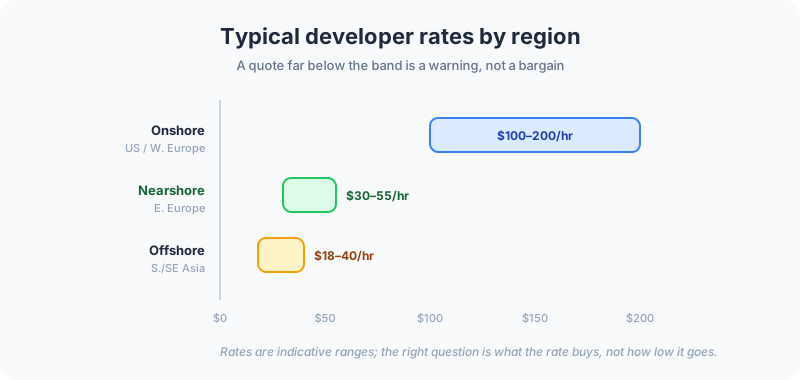
As a rough guide, onshore teams in the US or Western Europe run $100–200 an hour, nearshore teams in Eastern Europe $30–55, and offshore teams in South and Southeast Asia $18–40. A quote well under the regional floor usually means junior staff, no quality step, or scope you will pay for twice. The useful question is not "how low does it go" but "what does this rate buy" — seniority, review, testing, someone who pushes back.
"We'd recommend a fixed-price contract" (before they understand your project)
The model should follow the work, not the vendor's billing preference. There are three, and the fit is not subtle once you name it.
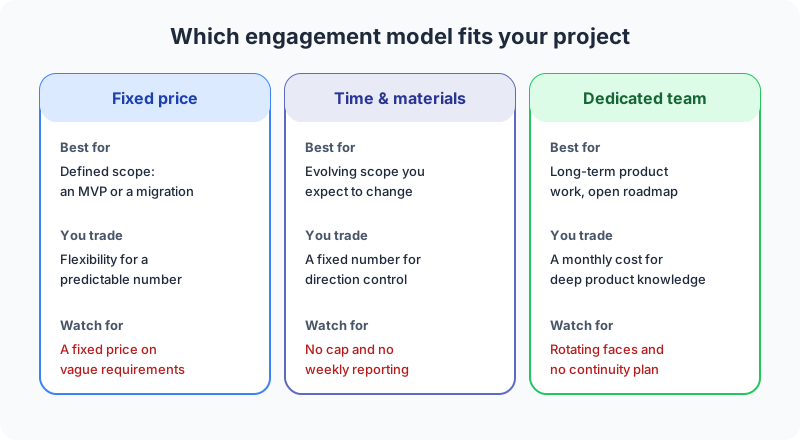
Fixed price suits genuinely defined scope, like an MVP with a locked feature list. Time and materials fits work you expect to change. A dedicated team fits long-term product work with an open roadmap. A vendor that recommends a model before asking what you are building is reading from a script. If the honest answer is that you need an embedded team rather than a one-off build, our pages on a dedicated team and software development outsourcing show how each runs in practice.
"We work in your time zone"
Worth verifying, because "your time zone" can mean one overlapping hour. The question is how many hours of your working day actually coincide with theirs.
Eastern European teams, for example, run on CET/EET and keep two to four hours of overlap with US East Coast business hours — enough for a same-day answer and a standup that suits both sides. One hour of overlap turns every decision into overnight email, however good the engineers are. Ask for the specific window.
The question no vendor prepares for
Every section above can be rehearsed. This one cannot: in the first call, propose something slightly wrong on purpose — an over-built feature, a deadline you know is unrealistic — and watch what happens. Do they push back, or nod along? The nod is comfortable in the meeting and expensive for the next year.
Pair it with one more: "If the developer who builds this leaves next month, who picks it up, and how long until they are productive?" A specific answer means the knowledge lives in the project, in documentation and shared understanding. A vague one means it lives in a person you do not employ.
How to verify a software development company before you sign
Answers are cheap. Stop interviewing and start testing:
- References that resemble you. Ask to speak to a client whose project looked like yours, not the trophy account. Verified profiles on Clutch or GoodFirms are harder to stage than testimonials on a company's own site.
- A small paid pilot. Scope a low-risk slice of real work before the big commitment. Two weeks of actual delivery tells you more than two months of calls, and a confident company will welcome it.
- A look at real code. Have your own engineer review the pilot's output. This is the quality step from the sales call, made visible.
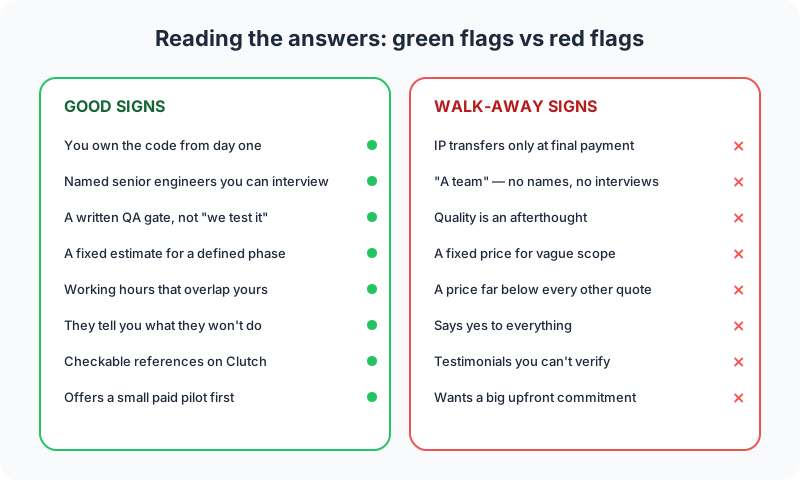
Run every candidate through the same lines and the pattern shows fast. Three or more answers on the right-hand side, and you keep looking.
When a software development company isn't the right fit
No single company is right for every job. A team built for long-term product work is the wrong choice for a one-week script, and a well-run offshore shop can be exactly right for well-specified, low-risk work on a generous timeline. And if the whole job is a few days of well-defined work, this interview is overkill — hire a vetted freelancer and move on. Match the company to the project, not to the logo. (For a fuller breakdown of scope, timelines, and pricing by project type, see our guide to custom software development services.)
And notice what none of these questions touched: the technology. The stack matters, but a company that owns its quality, says the hard thing, and survives a departure will learn your stack faster than one with the right logos and none of the rest.
You are not really choosing a vendor. You are choosing who will be on the call at 9 p.m. when something breaks, and whether they will tell you the truth about why. If you want to put your shortlist through these questions with someone on the other side of the table, get in touch.
Frequently Asked Questions
How do you choose a software development company?
Choose a software development company on answers that are easy to verify and hard to fake: who owns the code and IP, who actually writes and reviews it, which engagement model fits your project, whether your working hours overlap, what the price signals, and whether the company will tell you when you are wrong. Then verify the answers with references, a small paid pilot, and a look at real code before you sign.
What questions should you ask a software development company before hiring one?
Ask who owns the code and IP and when you get repository access; who specifically writes and reviews the code, and whether you can interview them; which engagement model they recommend and why; how many hours their working day overlaps yours; what the rate buys beyond hours; and what happens to your project if a key developer leaves. The most revealing question is whether they will tell you when an idea is not worth building.
What are the red flags when choosing a software development company?
The main red flags are: intellectual property that only transfers at final payment, or no repository access until then; an anonymous "team" you cannot name or interview; quality described as a feeling rather than a written step; a fixed price quoted against vague scope; a quote far below every other one; a vendor that says yes to everything; testimonials you cannot verify; and no plan for what happens when a developer leaves.
How much does it cost to hire a software development company?
Developer rates cluster by region: roughly $100-200 per hour onshore (US and Western Europe), $30-55 nearshore (Eastern Europe), and $18-40 offshore (South and Southeast Asia). A quote far below the regional band usually signals junior staff, no quality step, or rework you will pay for later. The useful question is what the rate buys - seniority, code review, testing, and a partner who pushes back - not how low it goes.
Should you choose a fixed-price contract or a dedicated team?
Choose a fixed price when scope is genuinely defined, such as an MVP with a locked feature list or a migration; you trade flexibility for a predictable number. Choose a dedicated team for long-term product work with an open roadmap, where you pay a monthly cost for people who build deep knowledge of your system. Time and materials sits between them, for work you expect to change. Match the model to the project rather than to the vendor's preference.